Computer Vision Development: Applications, Tech Stack, and Costs
What computer vision development involves in 2026, real-world applications, model selection, deployment architecture, and cost estimates for custom CV projects.
Computer Vision Development: Applications and Architecture (2026)
Quick answer. Computer vision development builds systems that interpret images and video — object detection, OCR, quality inspection, scene analysis, and medical imaging. The 2026 toolkit: pretrained models (YOLO, SAM, vision transformers) fine-tuned on your data, plus cloud vision APIs for common tasks. Start with one high-value use case and validate accuracy on real production images. Viprasol builds production CV pipelines end to end.
Computer vision has moved from research labs into production systems at companies across every industry. I've spent the last several years building computer vision systems at Viprasol, and I want to share what I've learned about the real challenges—not the academic theory, but the practical engineering needed to deploy working computer vision in production.
The promise of computer vision is enormous: machines that see and understand visual information as humans do. The reality is more nuanced. Modern computer vision works exceptionally well on specific, well-defined problems. It's brittle on unfamiliar data, computationally expensive, and requires careful engineering to deploy reliably.
What Computer Vision Actually Does
Computer vision is the field of artificial intelligence focused on enabling computers to interpret visual information from the world. This sounds simple until you actually try to build it. Human vision, which we consider effortless, is actually the product of sophisticated neural processing that computer vision systems are only beginning to approximate.
Modern computer vision systems typically perform one of several tasks:
Image classification answers: "What is in this image?" Your system receives an image and outputs a label (cat, dog, bicycle). This is the most straightforward task and also the most mature. Accuracy rates on benchmark datasets exceed 99%.
Object detection goes deeper: "What objects are in this image and where are they?" The system identifies objects and draws bounding boxes around them. This is more complex than classification but increasingly reliable.
Semantic segmentation labels every pixel: "Which pixels belong to which object?" This requires dense predictions across the entire image. It's more computationally expensive but provides richer information.
Instance segmentation combines detection and segmentation: "Which pixels belong to which specific object?" You can distinguish between two dogs as separate objects while identifying which pixels belong to each.
Pose estimation identifies keypoints: "Where are the person's joints?" This is critical for athletic analysis, fitness applications, and motion tracking.
3D reconstruction builds three-dimensional models from 2D images. This enables autonomous vehicle navigation, robotics, and spatial understanding.
Each task has different technical requirements, different accuracy expectations, and different deployment considerations.
Applications Beyond the Obvious
When I mention computer vision, people think of facial recognition or self-driving cars. Those are real applications, but the most impactful deployments are often less visible:
Manufacturing and quality control use computer vision to inspect products at superhuman speed and consistency. Defect detection that would require hundreds of human inspectors can be automated. I've built systems that inspect electronics boards at 1000+ units per hour.
Retail and analytics deploy computer vision for foot traffic analysis, shelf monitoring, and customer behavior understanding. Stores use these systems to optimize layouts and detect shrinkage.
Healthcare imaging applies computer vision to medical imaging analysis. Systems detect tumors, analyze x-rays, and assist radiologists. The stakes are high, which means accuracy and regulatory requirements are stringent.
Document processing uses computer vision to extract information from forms, receipts, and documents. This enables automated data entry and document classification.
Agriculture employs computer vision for crop monitoring, pest detection, and harvest optimization. Drones capture imagery, computer vision analyzes it, and the system outputs actionable recommendations.
Security and surveillance use computer vision for anomaly detection, person tracking, and threat identification.
These applications share common characteristics: well-defined problems, sufficient training data, acceptable error rates, and significant manual work to automate.
🤖 AI Is Not the Future — It Is Right Now
Businesses using AI automation cut manual work by 60–80%. We build production-ready AI systems — RAG pipelines, LLM integrations, custom ML models, and AI agent workflows.
- LLM integration (OpenAI, Anthropic, Gemini, local models)
- RAG systems that answer from your own data
- AI agents that take real actions — not just chat
- Custom ML models for prediction, classification, detection
Architecture Patterns for Computer Vision Systems
I approach computer vision architecture differently based on the problem characteristics:
Pre-trained transfer learning is my default starting point. Models trained on massive datasets (ImageNet, COCO) already understand visual features. You take these pre-trained models and fine-tune them on your specific problem. This approach is fast (weeks to months), relatively cheap, and works well for problems similar to the training data.
Custom training is necessary when transfer learning doesn't suffice. Your problem is sufficiently different from standard datasets that the pre-trained model's features don't transfer. You collect training data, design a model architecture, and train from scratch. This takes longer (months) and requires more data.
Ensemble methods combine multiple models for improved accuracy. You might combine detection models, classification models, and filtering rules. Ensemble systems are more accurate and more robust than single models.
Real-time optimization is critical for production systems. A 99% accurate model that takes 30 seconds to process an image is useless for real-time applications. Optimization techniques like quantization, pruning, and model distillation reduce computational requirements while maintaining accuracy.
Multi-stage pipelines break complex problems into simpler stages. Rather than one model solving everything, you use multiple models sequentially. First detect objects, then classify them, then measure properties. Each stage is simpler and more accurate.
The Data Problem
Here's the reality that surprised me early in my computer vision work: building the model is often the easy part. Preparing the data is the hard part.
You need data that's representative, labeled, and sufficient. "Representative" means it covers the variation your system will encounter in production. A model trained on sunny outdoor images fails on indoor images. A system trained on high-resolution images fails on low-resolution video.
"Labeled" means humans have annotated the data with ground truth. For object detection, this means drawing bounding boxes around objects. For segmentation, this means outlining precise object boundaries. This is tedious, error-prone, and expensive.
"Sufficient" means having enough examples. The general rule I use: you need at least 1000 labeled examples per category, ideally 5000+. More complex tasks need more data. For very complex tasks with millions of possible variations, you might need hundreds of thousands of examples.
Data labeling costs vary:
- Simple image classification: $0.10-0.50 per image
- Bounding box annotation: $1-5 per image
- Instance segmentation: $5-15 per image
- Complex tasks with quality control: $20-50+ per image
For a dataset of 10,000 images requiring box annotation, expect $10K-50K in labeling costs alone. This doesn't include the effort to organize data, define annotation guidelines, manage quality, and iterate.
At Viprasol, we've learned to be strategic about data:
Active learning identifies which examples to label. Rather than labeling randomly, you use model uncertainty to select examples where labeling would most improve performance. This reduces labeling requirements.
Synthetic data generates artificial images, avoiding labeling entirely. A game engine can generate infinitely varied images of specific objects with perfect labels. However, synthetic data often shows different characteristics than real data.
Data augmentation expands limited training data through transformations: rotations, crops, color adjustments, etc. This helps models generalize.
Semi-supervised learning uses both labeled and unlabeled data. The model learns from limited labels and large amounts of unlabeled data.
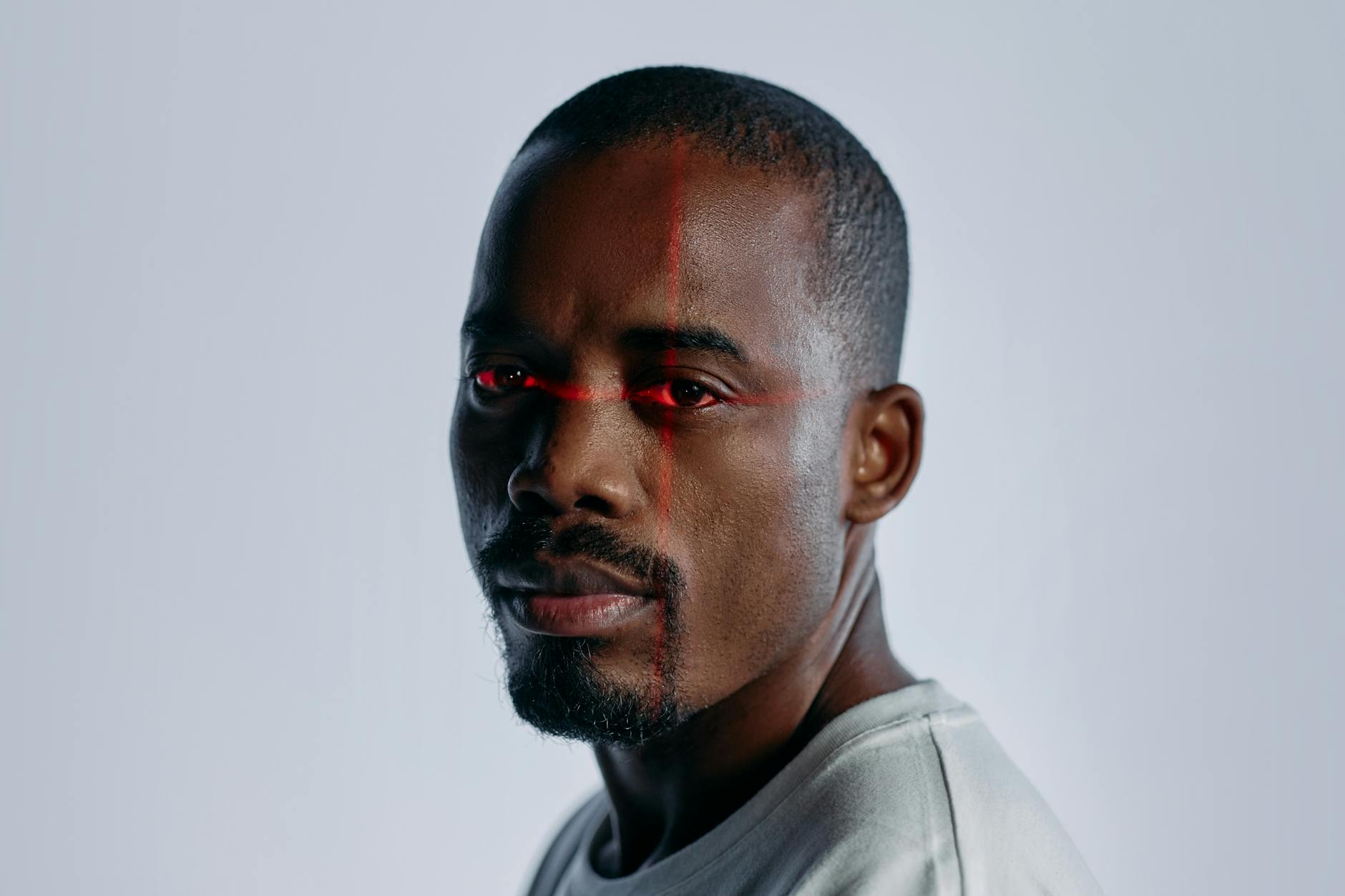
⚡ Your Competitors Are Already Using AI — Are You?
We build AI systems that actually work in production — not demos that die in a Colab notebook. From data pipeline to deployed model to real business outcomes.
- AI agent systems that run autonomously — not just chatbots
- Integrates with your existing tools (CRM, ERP, Slack, etc.)
- Explainable outputs — know why the model decided what it did
- Free AI opportunity audit for your business
Building Production Computer Vision Systems
Deploying computer vision to production differs significantly from research:
Handling out-of-distribution inputs: Your model was trained on specific data. Production data varies. Users upload blurry images, images from weird angles, images your model has never seen. Robust systems explicitly detect when inputs fall outside their training distribution and degrade gracefully.
Real-time performance: Models must process inputs fast enough for user experience. A desktop GPU might process images in 100ms. Edge devices (phones, IoT hardware) might have milliseconds. Optimization is non-optional.
Accuracy and false positive management: 95% accuracy sounds great until you realize that in 1000 daily inferences, 50 are wrong. Some wrong outputs are acceptable, others are catastrophic. You need to understand which errors matter and optimize accordingly.
Continuous monitoring: Production models degrade over time as data distribution shifts. Monitoring systems track accuracy, flag degradation, and trigger retraining.
Explainability and debugging: When the model makes wrong predictions, you need to understand why. Attention maps, saliency visualization, and example examination help debug failures.
Common Computer Vision Architectures
I typically recommend these architectures based on requirements:
ResNet and EfficientNet: General-purpose image classification backbones. Fast, accurate, well-understood. Good starting points.
YOLO and Faster R-CNN: Object detection architectures. YOLO is faster but slightly less accurate. Faster R-CNN is more accurate but slower. Choose based on speed vs. accuracy tradeoff.
U-Net and DeepLab: Segmentation architectures. Both are mature and reliable.
Vision Transformers: Newer architecture based on transformer models. Increasingly competitive, especially with limited data.
Mobile architectures (MobileNet, ShuffleNet): Designed for edge devices. Much smaller, orders of magnitude faster, slightly less accurate.
| Architecture | Primary Task | Speed (GPU) | Accuracy (ImageNet) | Typical Use Case |
|---|---|---|---|---|
| ResNet-50 | Classification | 50-100ms | 76% | General classification |
| EfficientNet-B4 | Classification | 80-150ms | 83% | Accuracy-critical tasks |
| YOLOv8 | Detection | 30-60ms | 53% mAP | Real-time detection |
| Faster R-CNN | Detection | 100-200ms | 62% mAP | High-accuracy detection |
| U-Net | Segmentation | 200-400ms | 92% IOU | Medical imaging |
| MobileNetV3 | Mobile Classification | 5-15ms | 75% | Edge devices |
Deployment Strategies
Computer vision models can be deployed in several ways:
Cloud processing: Images are sent to cloud servers where models run. Advantages: easy to update models, access to GPU infrastructure. Disadvantages: latency, privacy concerns, ongoing cloud costs.
Edge processing: Models run locally on user devices or local servers. Advantages: low latency, privacy, no internet required. Disadvantages: limited hardware, harder to update models.
Hybrid approaches: Critical inference happens locally, non-critical analysis happens in the cloud. This balances latency, accuracy, and update convenience.
For high-volume, low-latency requirements, I typically recommend:
- Optimize model for edge hardware
- Quantize to 8-bit integers (massive speedup, minimal accuracy loss)
- Deploy on local servers or edge devices
- Use cloud for continuous model improvement
Challenges in Real-World Deployment
Theory is clean. Production is messy. Here are challenges I encounter regularly:
Lighting conditions: Models trained under specific lighting fail under different lighting. You need diverse training data covering various lighting conditions.
Image quality: High-resolution training images don't help with low-resolution video. Training data must match production data.
Adversarial examples: Carefully constructed images can fool even accurate models. Production systems need robustness against intentional adversarial inputs.
Model drift: As your environment changes, model accuracy declines. You need monitoring and retraining pipelines.
Computational cost: Running large models continuously is expensive. Model compression and optimization are essential.
Working with Computer Vision Partners
Building computer vision systems requires specialized expertise. Many organizations choose to partner rather than build entirely in-house.
At Viprasol, we build custom vision systems through our computer vision development services. We handle the entire pipeline: problem definition, data collection and labeling, model selection and training, optimization and deployment.
Key questions when evaluating partners:
- Do they have experience with your specific problem domain?
- Can they handle data collection and labeling, or do you need to?
- What's their deployment and optimization process?
- What's their approach to ongoing model monitoring and improvement?
Future Trends in Computer Vision
Computer vision continues evolving rapidly:
Foundation models are large models trained on massive amounts of visual data. Like ChatGPT in NLP, these models can be fine-tuned for new tasks with minimal data.
Video understanding goes beyond individual frames to understanding temporal sequences. This enables action recognition, anomaly detection, and activity understanding.
3D vision combines 2D images with 3D understanding. This enables robotics, autonomous systems, and immersive applications.
Multimodal systems combine vision with text, audio, and other modalities for richer understanding.
Q&A
Q: How much training data do I really need? A: For simple classification, 1000-5000 labeled images per category is a good starting point. Complex problems with many variations need significantly more. Transfer learning reduces requirements substantially—sometimes 100-500 images suffice when starting from a pre-trained model.
Q: Should I build a computer vision system in-house or outsource? A: In-house is valuable if vision is core to your product and competitive advantage. Outsourcing makes sense if you need fast deployment, lack deep expertise, or need focused projects. Many companies do both: outsource initial development, then build internal capabilities.
Q: How long does it take to build a production computer vision system? A: A simple classification system can be working in 4-6 weeks. Moderate complexity (detection, segmentation) typically takes 3-6 months. Complex systems with edge deployment and high accuracy requirements take 6-12+ months.
Q: Can I use pretrained models directly without any training? A: Often yes, as a starting point. But accuracy on your specific problem typically improves with fine-tuning on your data. The effort is usually worth it.
Q: What's the minimum computational requirement for deployment? A: It depends on your model and requirements. A mobile phone CPU can handle lightweight models for simple tasks. Real-time video processing of complex models typically requires GPUs. Edge devices like NVIDIA Jetson enable GPU acceleration on small form factors.
Q: How do I handle privacy concerns with video data? A: Use edge processing to avoid sending video to cloud systems. Implement privacy-preserving techniques like federated learning (model training across distributed devices without sending data to central servers). Be explicit about data retention policies.
Computer vision is a powerful tool, but it's not magic. Success requires clear problem definition, quality data, appropriate architecture choices, and thoughtful deployment strategy. The most successful computer vision systems I've seen have been those where organizations deeply understood their specific problem and matched it with appropriately scoped technical solutions.
If you're building computer vision systems, don't underestimate the data and deployment challenges. They typically consume more effort than model development. And don't hesitate to bring in experts—the computer vision field moves quickly, and specialized knowledge accelerates projects significantly.
At Viprasol, we help organizations navigate the computer vision landscape from initial exploration through production deployment. Our computer vision development services cover the entire pipeline. If you're considering computer vision for your organization, let's discuss how we can help.
External Resources
About the Author
Viprasol Tech Team
Custom Software Development Specialists
The Viprasol Tech team specialises in algorithmic trading software, AI agent systems, and SaaS development. With 1000+ projects delivered across MT4/MT5 EAs, fintech platforms, and production AI systems, the team brings deep technical experience to every engagement.
Want to Implement AI in Your Business?
From chatbots to predictive models — harness the power of AI with a team that delivers.
Free consultation • No commitment • Response within 24 hours
Ready to automate your business with AI agents?
We build custom multi-agent AI systems that handle sales, support, ops, and content — across Telegram, WhatsApp, Slack, and 20+ other platforms. We run our own business on these systems.