Testing React Applications: Complete Guide to Unit and E2E Testing
Companies using custom software ship new features 40% faster than those constrained by SaaS platforms.
Testing React Applications: Complete Guide to Unit and E2E Testing: Complete Guide 2026
By Viprasol Tech Team | Updated 2026-02-26
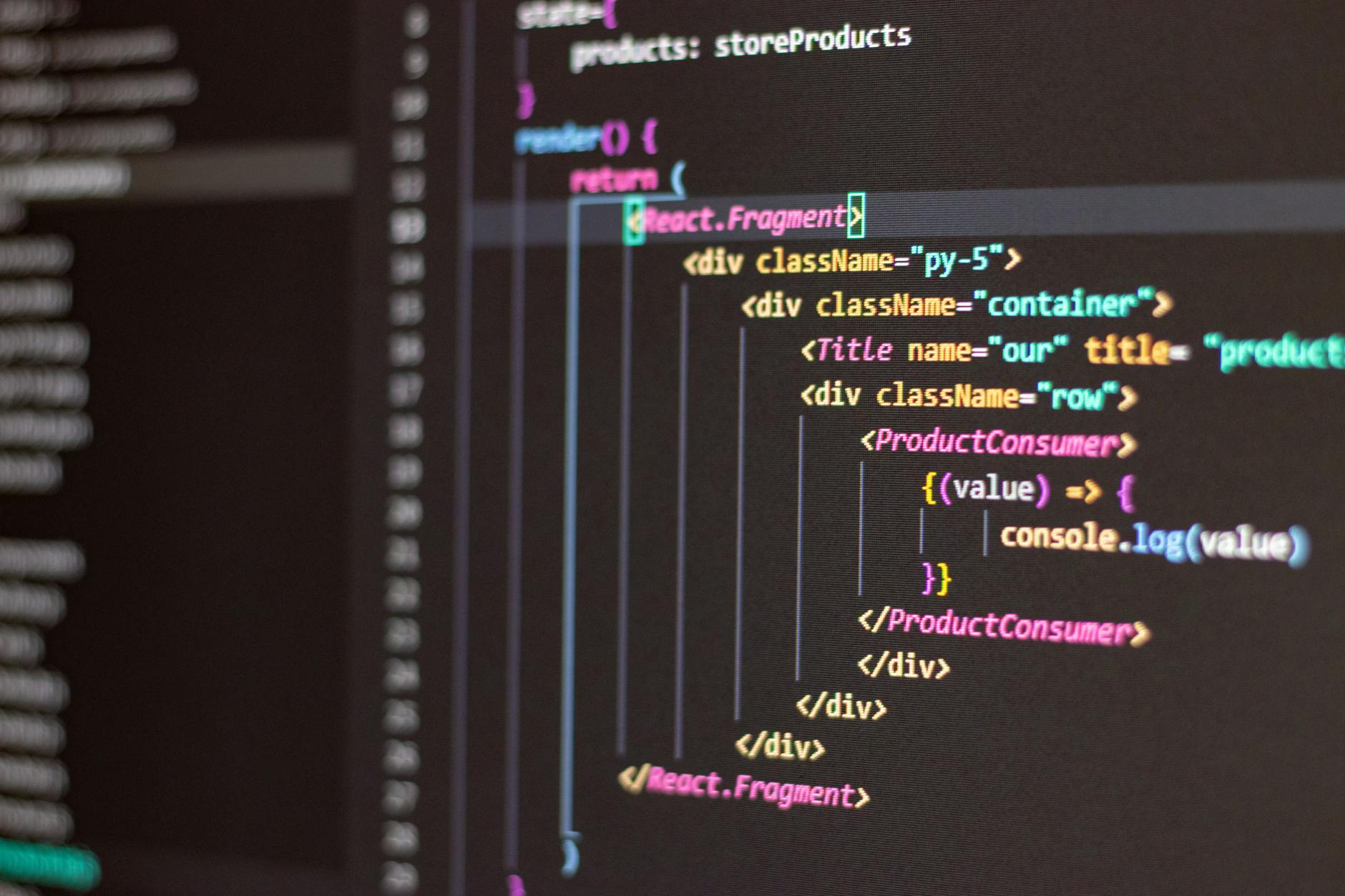
Companies using custom software ship new features 40% faster than those constrained by SaaS platforms.
This guide covers testing react applications: complete guide to unit and e2e testing end-to-end — the core concepts, practical implementation steps, common mistakes, and the tools professionals use in production. Whether you're learning this for the first time or looking to sharpen your existing knowledge, you'll find actionable depth here.
What Is Testing React Applications: Complete Guide to Unit and E2E Testing?
Testing React Applications: Complete Guide to Unit and E2E Testing is one of the foundational topics that separates junior practitioners from professionals who consistently deliver results. Understanding it deeply — not just superficially — is what allows you to make better decisions under pressure, whether in a trading context or a software engineering environment.
At its core, testing react applications: complete guide to unit and e2e testing refers to the principles, methods, and tools used to achieve a specific outcome reliably and at scale. The professionals who master this area don't just know the theory — they've applied it in real environments, debugged edge cases, and iterated based on real-world feedback.
Why it matters in 2026:
- Increasing complexity in systems means foundational knowledge compounds in value
- Competitive markets reward practitioners who can execute, not just conceptualise
- The gap between understanding something theoretically and deploying it reliably is where most failures happen
Core Concepts You Need to Know
The Fundamentals
Before diving into implementation, it's essential to understand the core principles that underpin testing react applications: complete guide to unit and e2e testing:
Signal vs. Noise — In any data-rich environment, most inputs are irrelevant. Learning to distinguish signal from noise is the first and most important skill. This applies whether you're reading market data, system logs, or user behaviour analytics.
Feedback loops — Every system produces signals about its own performance. Setting up proper feedback mechanisms — metrics, alerts, review cycles — is what separates systems that improve over time from those that degrade.
Compounding effects — Small improvements in the right places compound dramatically. A 2% edge in precision, applied 1,000 times, produces extraordinary results. This is as true in algorithmic trading as it is in software reliability engineering.
Failure modes — Understanding how something fails is often more valuable than understanding how it works. The best practitioners can reason backwards from failure to root cause quickly and accurately.
Key Principles
| Principle | What It Means | Why It Matters |
|---|---|---|
| Precision | Accuracy in measurement and execution | Errors compound in complex systems |
| Reproducibility | Same inputs produce same outputs | Critical for testing and debugging |
| Observability | You can measure and monitor behaviour | Can't improve what you can't measure |
| Robustness | Graceful handling of edge cases | Production environments are unpredictable |
| Scalability | Performance holds under increased load | Growth should not require rewrites |
🌐 Looking for a Dev Team That Actually Delivers?
Most agencies sell you a project manager and assign juniors. Viprasol is different — senior engineers only, direct Slack access, and a 5.0★ Upwork record across 100+ projects.
- React, Next.js, Node.js, TypeScript — production-grade stack
- Fixed-price contracts — no surprise invoices
- Full source code ownership from day one
- 90-day post-launch support included
How It Works: Step-by-Step
Phase 1 — Foundation Setup
The first phase is always about getting the environment right. This means:
- Define your objective clearly — What specific outcome are you trying to achieve? Vague objectives produce vague results. Write it down in one sentence.
- Select your tools — Use industry-standard tooling where possible. Exotic tools introduce unnecessary risk. See the stack table below.
- Set up your testing environment — Never develop against production data or systems. A proper sandbox environment saves enormous time.
- Establish baseline metrics — Before you change anything, measure the current state. This is your benchmark for improvement.
Phase 2 — Core Implementation
| Layer | Technologies |
|---|---|
| Frontend | React.js, Next.js, TypeScript, Tailwind CSS |
| Backend | Node.js, Python FastAPI, PostgreSQL, Redis |
| Infrastructure | AWS, Docker, Nginx, GitHub Actions |
With your foundation in place:
- Start minimal — Build the simplest possible version that demonstrates the core concept working. Resist the urge to add complexity before you've validated the basics.
- Test with real data — Synthetic or toy data hides edge cases that real data exposes immediately. Test with production-representative data from the start.
- Instrument everything — Add logging, metrics, and tracing before you think you need them. You will need them.
- Document as you go — The code you write today will be debugged by you-in-six-months who has forgotten the context. Write for that person.
Phase 3 — Optimisation and Hardening
Once the core works:
- Profile before optimising — Never optimise based on intuition. Profile first, then optimise the bottleneck. Most perceived performance problems are not where you think they are.
- Add error handling — What happens when things go wrong? Every external dependency, every I/O operation, every user input needs a failure path.
- Load test — Find your limits before your users do. Run realistic load simulations and fix what breaks.
- Security review — At minimum, review for the most common vulnerabilities relevant to your system type.
Common Mistakes (and How to Avoid Them)
Mistake 1: Overfitting to examples Learning from tutorials and examples is fine, but production systems encounter conditions tutorials never cover. Always ask: "What happens when this assumption breaks?"
Mistake 2: Skipping the boring parts Error handling, logging, testing, documentation — these feel unimportant until they're the only thing standing between you and a 3am incident. Do them properly from the start.
Mistake 3: Premature optimisation "The root of all evil in programming." Build it right first, then make it fast. Optimising before you understand the bottleneck wastes time and creates complexity.
Mistake 4: Ignoring operational concerns How will this be deployed, monitored, scaled, and updated? If you can't answer these questions before you build, you'll answer them painfully after.
Mistake 5: Not reviewing existing work Whatever you're trying to do, someone has done it before. Study prior art — papers, open-source projects, postmortems — before designing your approach.
🚀 Senior Engineers. No Junior Handoffs. Ever.
You get the senior developer, not a project manager who relays your requirements to someone you never meet. Every Viprasol project has a senior lead from kickoff to launch.
- MVPs in 4–8 weeks, full platforms in 3–5 months
- Lighthouse 90+ performance scores standard
- Works across US, UK, AU timezones
- Free 30-min architecture review, no commitment
Best Practices Used by Professionals
- Version control everything — Not just code. Configuration, data schemas, infrastructure definitions.
- Automate repetitive tasks — If you do it more than twice, script it. Manual processes are error-prone and don't scale.
- Review and iterate — Regular retrospectives and performance reviews catch drift before it becomes a problem.
- Keep dependencies minimal — Every dependency is a liability. Add them deliberately and audit them regularly.
- Test at the boundary — The most valuable tests are at the edges of your system's assumed input range, not the happy path.
How Viprasol Can Help
Our team has deep expertise across React, Software Development, Web Development and related domains. Whether you need a custom implementation built from scratch, an existing system reviewed and optimised, or expert guidance on a specific challenge — we deliver with full IP transfer and transparent fixed-price contracts.
Our delivery model:
- ✅ Free initial technical consultation
- ✅ Fixed-price contracts — no surprise invoices
- ✅ Direct access to the senior engineer on your project
- ✅ Full IP ownership transferred to you
- ✅ 90-day post-launch support included
Frequently Asked Questions
What is testing react applications: complete guide to unit and e2e testing and why does it matter?
Testing React Applications: Complete Guide to Unit and E2E Testing is a core concept for technology and trading professionals in 2026. Mastering it gives you a measurable edge — whether in system design, strategy development, or production reliability.
How do I get started with testing react applications: complete guide to unit and e2e testing?
Start with the fundamentals: understand the theory, then implement a minimal working version. Use the tools and frameworks listed in this guide. Most practitioners are production-ready within 4–8 weeks of focused practice.
What are the most common mistakes with testing react applications: complete guide to unit and e2e testing?
The top mistakes are: (1) skipping the theoretical foundation and jumping straight to implementation, (2) not testing with real data or edge cases, (3) ignoring performance and scalability until problems emerge in production.
What tools are used for testing react applications: complete guide to unit and e2e testing?
The standard tooling depends on your stack. For trading and financial applications: Python (Pandas, NumPy, TA-Lib), MQL5, and Backtrader are industry standards. For software engineering: the major cloud platforms and containerisation tools dominate.
Can Viprasol build a custom testing react applications: complete guide to unit and e2e testing solution?
Yes. We've delivered web-dev-domain solutions for clients in the US, UK, and Australia. We offer fixed-price builds, full IP transfer, and 90-day post-launch support. Contact us for a free scoping call.
Resources
Authoritative References
Related Services from Viprasol
Summary
Testing React Applications: Complete Guide to Unit and E2E Testing rewards depth of understanding. The practitioners who invest in truly understanding the fundamentals — rather than just copying patterns — consistently outperform those who don't. Use this guide as a foundation, then build on it with hands-on practice.
If you need help building a production system in this domain, our team is available for a free consultation.
About the Author
Viprasol Tech Team
Custom Software Development Specialists
The Viprasol Tech team specialises in algorithmic trading software, AI agent systems, and SaaS development. With 100+ projects delivered across MT4/MT5 EAs, fintech platforms, and production AI systems, the team brings deep technical experience to every engagement. Based in India, serving clients globally.
Need a Modern Web Application?
From landing pages to complex SaaS platforms — we build it all with Next.js and React.
Free consultation • No commitment • Response within 24 hours
Need a custom web application built?
We build React and Next.js web applications with Lighthouse ≥90 scores, mobile-first design, and full source code ownership. Senior engineers only — from architecture through deployment.