Computer Vision Development: Applications, Tech Stack, and Costs
What computer vision development involves in 2026, real-world applications, model selection, deployment architecture, and cost estimates for custom CV projects.
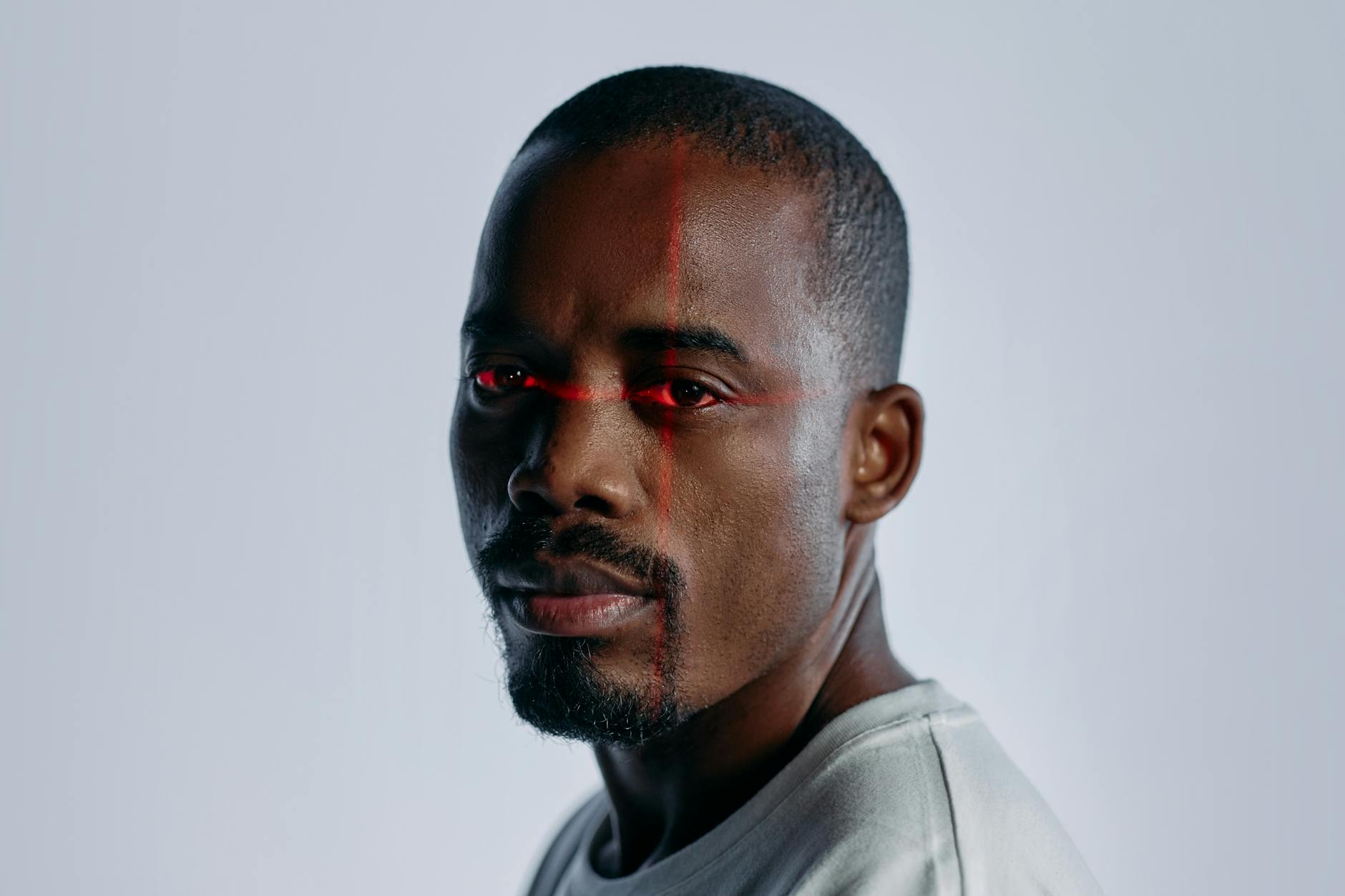
Computer Vision Development: Applications, Tech Stack, and Costs (2026)
Computer vision — the ability of software to interpret and understand images and video — has moved from research curiosity to production reality. The combination of powerful pre-trained models, cloud inference infrastructure, and accessible SDKs has made CV applications practical for companies that are not AI labs.
Real-World CV Applications
Quality control — detecting defects in manufactured products on production lines. Replaces or augments human visual inspection. Typical accuracy: 95-99%+ on well-defined defect types.
Document processing — extracting structured data from invoices, forms, passports, and receipts. Replaces manual data entry. Combines OCR with layout understanding.
Medical imaging — identifying anomalies in X-rays, MRI scans, pathology slides. Assists radiologists and pathologists rather than replacing them.
Retail analytics — customer counting, heatmaps, shelf stock monitoring, queue analysis. Extracts business intelligence from existing camera infrastructure.
Security and access control — face recognition, license plate reading, perimeter monitoring. High accuracy requirements, significant privacy implications.
Autonomous operations — drone navigation, robot vision, autonomous vehicle systems. Highest complexity and safety requirements.
Model Selection Guide
from ultralytics import YOLO
import cv2
import numpy as np

# Object Detection with YOLOv11
model = YOLO("yolo11n.pt")  # nano = fastest, yolo11x = most accurate

def detect_objects(image_path: str, confidence: float = 0.5):
    results = model(image_path, conf=confidence)

    detections = []
    for result in results:
        for box in result.boxes:
            detections.append({
                "class": result.names[int(box.cls)],
                "confidence": float(box.conf),
                "bbox": box.xyxy[0].tolist(),  # [x1, y1, x2, y2]
            })

    return detections

# Classification with fine-tuned EfficientNet
import torch
from torchvision import models, transforms

def build_classifier(num_classes: int, pretrained: bool = True):
    model = models.efficientnet_b0(weights='DEFAULT' if pretrained else None)
    # Replace final layer for your number of classes
    model.classifier[1] = torch.nn.Linear(model.classifier[1].in_features, num_classes)
    return model

# Training loop (simplified)
def train_epoch(model, loader, optimizer, criterion, device):
    model.train()
    total_loss = 0
    correct = 0

    for images, labels in loader:
        images, labels = images.to(device), labels.to(device)
        optimizer.zero_grad()
        outputs = model(images)
        loss = criterion(outputs, labels)
        loss.backward()
        optimizer.step()

        total_loss += loss.item()
        correct += (outputs.argmax(1) == labels).sum().item()

    return total_loss / len(loader), correct / len(loader.dataset)
🤖 AI Is Not the Future — It Is Right Now
Businesses using AI automation cut manual work by 60–80%. We build production-ready AI systems — RAG pipelines, LLM integrations, custom ML models, and AI agent workflows.
- LLM integration (OpenAI, Anthropic, Gemini, local models)
- RAG systems that answer from your own data
- AI agents that take real actions — not just chat
- Custom ML models for prediction, classification, detection
Pre-Built vs Custom Models
| Approach | When to Use | Accuracy | Cost |
|---|---|---|---|
| Cloud Vision APIs (Google, AWS, Azure) | Common objects, faces, text, labels | Good for general cases | Low upfront, per-call cost |
| Fine-tuned YOLO/EfficientNet | Specific objects in your domain | High with 500+ images | Medium development |
| Custom architecture from scratch | Very specific requirements, research | Highest potential | High — months of work |
| Foundation model adaptation | Complex scenes, multimodal | State of art | Medium-High |
For most business applications: start with cloud APIs. If accuracy is insufficient for your specific domain, fine-tune a pre-trained model on your data. Build from scratch only for genuinely novel problems.
Data Requirements
| Task | Minimum Dataset | Recommended |
|---|---|---|
| Binary classification | 500 images/class | 2,000+ |
| Multi-class (10 classes) | 200/class | 1,000+/class |
| Object detection | 500 annotated images | 2,000+ |
| Semantic segmentation | 300 annotated images | 1,000+ |
| Defect detection | 100 defect examples | 500+ |
Data quality matters more than quantity. Consistent lighting, representative edge cases, and accurate labels outperform more data with noise.
⚡ Your Competitors Are Already Using AI — Are You?
We build AI systems that actually work in production — not demos that die in a Colab notebook. From data pipeline to deployed model to real business outcomes.
- AI agent systems that run autonomously — not just chatbots
- Integrates with your existing tools (CRM, ERP, Slack, etc.)
- Explainable outputs — know why the model decided what it did
- Free AI opportunity audit for your business
Deployment Architecture
# Production CV inference service
services:
  cv-inference:
    image: cv-service:latest
    deploy:
      resources:
        reservations:
          devices:
            - driver: nvidia
              count: 1
              capabilities: [gpu]
    environment:
      - MODEL_PATH=/models/yolo11n.pt
      - BATCH_SIZE=4
      - CONFIDENCE_THRESHOLD=0.5
    volumes:
      - ./models:/models
For real-time processing: GPU inference on dedicated hardware or cloud GPU instances. For batch processing: CPU-based inference is often sufficient and significantly cheaper.
Building a computer vision application? Viprasol develops custom CV systems for industrial and commercial use cases. Contact us.
See also: Machine Learning Development Services · Generative AI Development Company Guide
About the Author
Viprasol Tech Team
Custom Software Development Specialists
The Viprasol Tech team specialises in algorithmic trading software, AI agent systems, and SaaS development. With 100+ projects delivered across MT4/MT5 EAs, fintech platforms, and production AI systems, the team brings deep technical experience to every engagement. Based in India, serving clients globally.
Want to Implement AI in Your Business?
From chatbots to predictive models — harness the power of AI with a team that delivers.
Free consultation • No commitment • Response within 24 hours
Ready to automate your business with AI agents?
We build custom multi-agent AI systems that handle sales, support, ops, and content — across Telegram, WhatsApp, Slack, and 20+ other platforms. We run our own business on these systems.